
Free Estimates on All Epoxy Floors
Avoid These 5 Critical Concrete Coating Mistakes in Rockwall, TX
Your Complete Guide to Long-Lasting Floors
Skipping Proper Surface Preparation
The most devastating mistake we see across Rockwall involves homeowners who skip or rush the surface preparation phase. Concrete must be thoroughly cleaned, degreased, and profiled before any coating touches the surface. Oil stains from vehicles, dust accumulation, and even invisible contaminants create barriers that prevent proper adhesion. When coatings fail to bond correctly, they peel, bubble, or delaminate within months rather than lasting decades.
In Rockwall’s climate, where garage floors and driveways endure intense summer heat, poor surface prep accelerates failure dramatically. The concrete expands and contracts with temperature swings, and without proper mechanical bonding through diamond grinding or acid etching, coatings simply cannot withstand these forces. We’ve seen DIY jobs fail in their first Texas summer because the installer skipped the grinding step or used household cleaners instead of industrial degreasers.
Professional preparation involves concrete surface grinding to open the pores, remove weak surface layers, and create the proper profile for coating penetration. This step cannot be shortcut. If you’re considering a coating project, visit our gallery to see how properly prepared surfaces deliver flawless, long-lasting results that withstand everything Rockwall weather throws at them.
Ignoring Moisture and Vapor Issues
Moisture trapped beneath concrete coatings causes some of the most frustrating and expensive failures. Many property owners don’t realize that concrete naturally wicks moisture from the ground below, especially in Texas where soil composition and seasonal rainfall create hydrostatic pressure. When moisture vapor tries to escape through a non-breathable coating, it creates blistering, whitish hazing, and eventual delamination.
We routinely perform moisture testing on Rockwall concrete before application because local soil conditions make vapor transmission a real concern. Spring rains saturate the ground, and moisture continues migrating upward for weeks. Coating over damp concrete guarantees failure. The proper approach involves moisture meter testing, calcium chloride tests for vapor emission rates, and sometimes installing vapor barrier systems before coating application.
Newer homes in developments around Rowlett Road and along Lake Ray Hubbard frequently have higher moisture transmission rates due to construction methods and soil types. Without proper assessment and mitigation, coatings will fail regardless of quality. Professional installers understand these regional factors and select appropriate moisture control solutions that address the root cause rather than masking symptoms.
Applying the Wrong Coating Type
Not all concrete coatings perform equally across different environments and use cases. Selecting the wrong product type represents one of the costliest mistakes because the coating may initially look acceptable but fails prematurely under stress. Standard garage floor paints from big-box retailers simply cannot withstand hot tire pickup, chemical spills, or abrasion like purpose-engineered epoxy or polyaspartic systems.
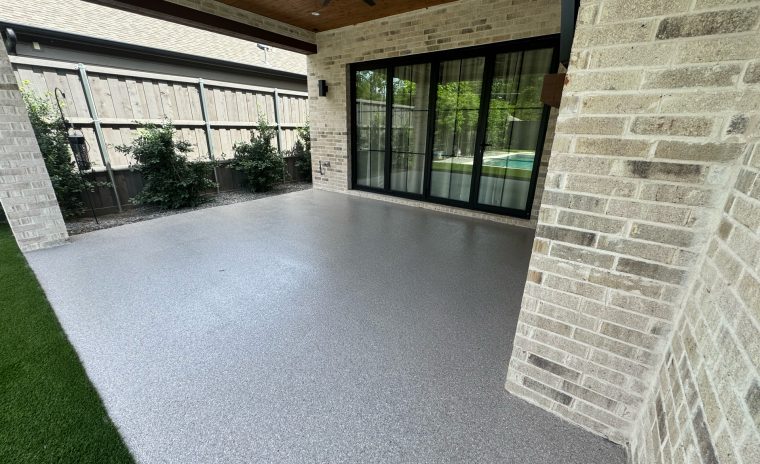
For outdoor applications around Rockwall, including patio and pool deck coatings, UV stability becomes critical. Texas sun degrades inferior products quickly, causing yellowing, chalking, and surface breakdown. We’ve replaced countless box-store epoxies that turned amber within a single summer season. True UV-resistant polyaspartic coatings maintain color and integrity for years under intense sunlight that characterizes our region.
Interior spaces require different considerations. Kitchen and basement floor coatings need food-safe certifications, moisture resistance, and appropriate slip resistance. Commercial environments demand industrial-grade systems with rapid cure times to minimize downtime. Matching the coating chemistry to the specific application, traffic patterns, and environmental stressors ensures longevity. Review your project requirements with professionals who understand regional demands and can recommend appropriate systems rather than one-size-fits-all solutions.
Rushing the Cure Time
Impatience destroys more coating projects than almost any other factor. Each coating system requires specific cure times before it can handle foot traffic, vehicles, or furniture placement. Rushing this process leaves permanent tire marks, indentations, and compromised surface hardness. While modern polyaspartic coatings cure faster than traditional epoxies, even these advanced systems need proper time to achieve full chemical cross-linking.
We frequently encounter Rockwall homeowners who want their garage back in service immediately, especially during scorching summer months when parking outside feels unbearable. However, placing a hot vehicle on partially cured coating causes tire pickup where the coating literally adheres to tires and pulls away from the floor. Temperature affects cure rates significantly. Winter applications may require additional time, while summer heat can accelerate curing but also create application challenges if products set too quickly.
Professional installers provide realistic timelines based on current conditions and product specifications. Standard epoxy systems typically require 24 hours for foot traffic and 72 hours for vehicles. Polyaspartic systems may allow faster return to service but still demand patience. Following manufacturer guidelines and installer recommendations protects your investment. Consult with professionals about scheduling to ensure adequate cure time without compromising your daily routine unnecessarily.
Neglecting Temperature and Climate Control
Temperature and humidity directly impact coating performance during application and curing. Most epoxy and polyaspartic systems specify application windows between 50 and 90 degrees Fahrenheit with relative humidity below 85 percent. Working outside these parameters causes application defects including poor leveling, surface imperfections, blushing, and inadequate curing. Rockwall’s climate presents challenges on both ends of the spectrum throughout the year.
Summer garage floors regularly exceed 100 degrees, causing coatings to gel prematurely before proper spreading and self-leveling occur. This creates texture issues, visible roller marks, and uneven thickness. Conversely, winter morning applications when concrete temperatures drop below 50 degrees prevent proper chemical reactions, resulting in soft coatings that never achieve full hardness. We’ve seen DIY projects fail because installers worked during midday July heat or cold January mornings without understanding temperature impacts.
Professional applicators monitor substrate temperature, ambient temperature, and humidity continuously. They schedule work during optimal weather windows, use climate control when available, and adjust product ratios for prevailing conditions. Some advanced coating systems tolerate wider temperature ranges, but proper environmental control remains essential. Working with experienced professionals ensures your project proceeds under ideal conditions for maximum performance and longevity, regardless of season.
